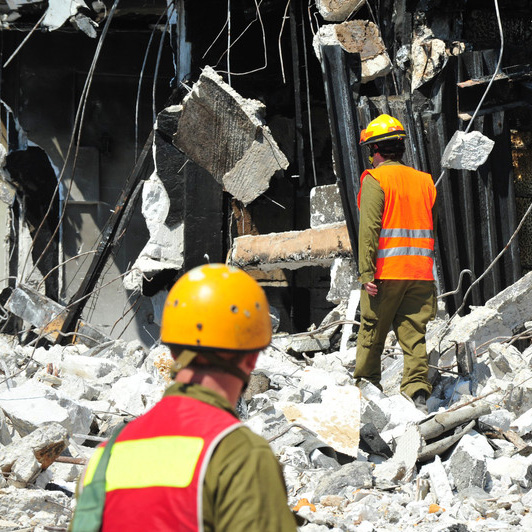
Engineers and scientists at Rensselaer Polytechnic Institute are working to develop powerful new decision-making and data visualization tools for emergency management. These tools aim to help law enforcement, health officials, water and electric utilities, and others to collaboratively and effectively respond to disasters.

Prof. Mark Embrechts is one of the 5 Co-PIs for a three-year 5.2 M DARPA grant (high throughput multi-spectral 3-D histology and predictive statistical technologies for identifying the critical combination of factors impacting long-term performance of implanted neuroprosthetics) addressing the reliability of brain implant chips. This grant is coordinated by Prof. Badri Roysam at the University of Houston (systems code), Prof. William Shain at the Washington Children’s Hospital in Seattle (histology of brain specimens), Prof. Daryl Kipke at the University of Michigan (who produces the brain implant devices and electrophysiology) and Profs. Kristin Bennett and Mark Embrechts at Rensselaer. The project involves two graduate students at Rensselaer: Chris Gatti in the Department of Industrial and Systems Engineering and James Blondin in the Department of Mathematical Sciences. The Rensselaer team is responsible for establishing statistical reliability limits, statistical support, and machine learning support for the analysis and visualization tasks related to this grant. Part of the grant is outsourced and relies on private companies to perform the brain surgeries on rats and provide the relevant histology and electrophysiology data.
The picture shows part of the research team and the DARPA review team in front of the Lab of Prof. Daryl Kipke at the University of Michigan in Ann-Arbor during the 6-month review by DARPA.